

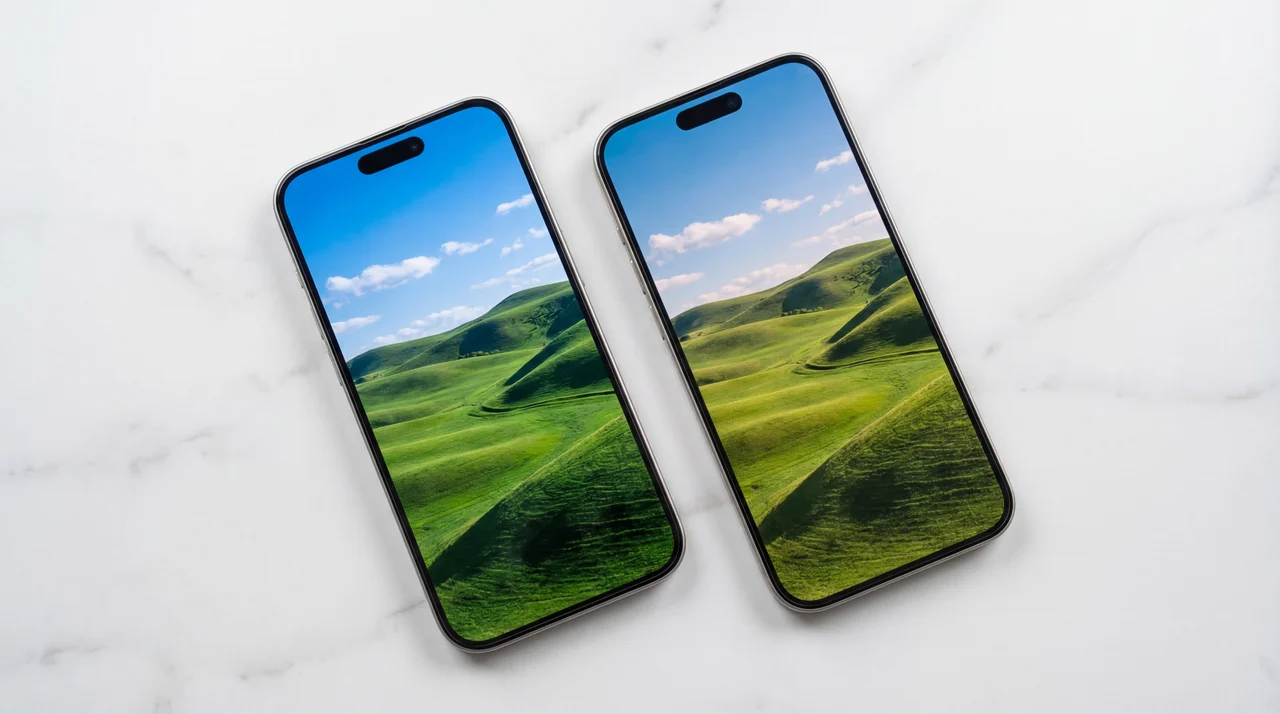
Premium vs Aftermarket iPhone Screen Repair
Compare original Apple screens with high-quality aftermarket soft OLED alternatives. See prices, features, and honest advice.
By Riki Baker · Updated 1 October 2026
Screen Repair Quote
Tell us your iPhone model and we'll get back to you within 24 hours.
The short answer: A premium iPhone screen uses an Apple-designed original display with True Tone, precise colour calibration, and full haptic touch. An aftermarket soft OLED screen is a high-quality third-party alternative that costs significantly less. Both work well for everyday use, but premium offers the closest-to-factory experience, and since iOS 27 it is the only one of the two that keeps Tap to Wake, because the genuine screen is configured with Apple and an aftermarket one cannot be. We recommend premium when budget allows, but aftermarket soft OLED is a reliable and cost-effective option -and we only use soft OLED, never hard OLED or LCD.
What Is a Premium iPhone Screen?
A premium screen is an original Apple display -either sourced new from a manufacturer-authorised supplier, a grade A pulled screen in perfect condition, or a grade A screen refurbished in-house to like-new standard. Every premium screen we fit is a genuine Apple core LCD / OLED panel, not a copy or reproduction.
Apple-designed and manufactured to exact specifications
True Tone and auto-brightness for ambient lighting
Precise colour calibration matched to factory settings
Haptic touch feedback works exactly as intended
Configured with Apple, so Tap to Wake keeps working on iOS 27
The display Apple designed -nothing compromised
If you want your iPhone to feel exactly as it did when it was new, a premium screen replacement is the way to go.
Still deciding whether to fix the phone at all? Our guide to whether it is worth repairing your iPhone helps you weigh the repair against replacing it before you choose a screen.
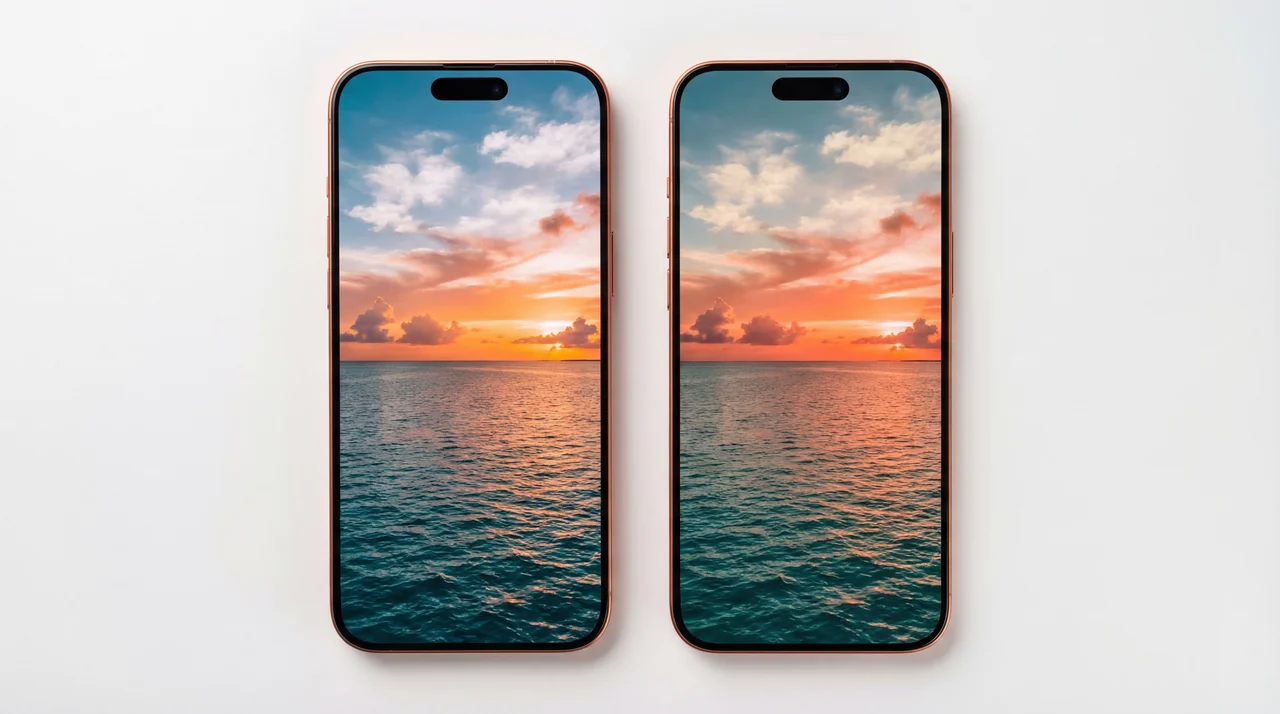
Premium (left) vs aftermarket soft OLED (right) - the difference is subtle in everyday use.
What Is an Aftermarket iPhone Screen?
An aftermarket screen is a third-party display designed to replace the original. Quality varies enormously depending on the type of panel used -and the type matters far more than most people realise.
What We Use: Soft OLED
High-quality soft OLED -the same display technology Apple uses
Good colour reproduction -most won't notice a difference daily
Full touch and haptic functionality
Thin, flexible panel sits flush with the frame
Significantly lower cost than Apple's original parts
What We Don't Use: Poor Quality Aftermarket
Not all aftermarket screens are created equal. Many repair shops use cheap hard OLED or LCD panels to maximise profit. We deliberately avoid these -here's why:
Hard OLED
- Thicker rigid panel -can sit proud of the frame
- More brittle -rigid substrate shatters on impact
- Higher battery drain than soft OLED
- Easier to crack because the display can't flex
LCD
- No OLED blacks -washed-out, dull colours
- Significantly thicker -visibly protrudes from the frame
- Much higher battery drain (backlight always on)
- Very noticeable quality difference
- Extremely brittle glass/LCD sandwich
Side-by-Side Comparison
| Feature | Premium | Aftermarket (Soft OLED) |
|---|---|---|
| Display Technology | Apple Super Retina XDR OLED | Soft OLED |
| Designed by Apple | Yes | No |
| True Tone Support | Yes | May not be supported |
| Tap to Wake (iOS 27) | Yes, once configured | Switched off by iOS 27 |
| Colour Accuracy | Factory-calibrated | Very good (slight variance possible) |
| Touch Responsiveness | Exact factory spec | Full functionality |
| Battery Impact | None (original spec) | Minimal to moderate |
| Thickness & Fit | Perfect flush fit | Flush fit (identical) |
| Durability | Factory standard | Comparable (flexible) |
| Warranty | 12-month warranty | 12-month warranty |
| Price | Varies by model | Save ~46% on average |
Display Technology
Premium
Apple Super Retina XDR OLED
Aftermarket
Soft OLED
Designed by Apple
Premium
Yes
Aftermarket
No
True Tone Support
Premium
Yes
Aftermarket
May not be supported
Tap to Wake (iOS 27)
Premium
Yes, once configured
Aftermarket
Switched off by iOS 27
Colour Accuracy
Premium
Factory-calibrated
Aftermarket
Very good (slight variance possible)
Touch Responsiveness
Premium
Exact factory spec
Aftermarket
Full functionality
Battery Impact
Premium
None (original spec)
Aftermarket
Minimal to moderate
Thickness & Fit
Premium
Perfect flush fit
Aftermarket
Flush fit (identical)
Durability
Premium
Factory standard
Aftermarket
Comparable (flexible)
Warranty
Premium
12-month warranty
Aftermarket
12-month warranty
Price
Premium
Varies by model
Aftermarket
Save ~46% on average
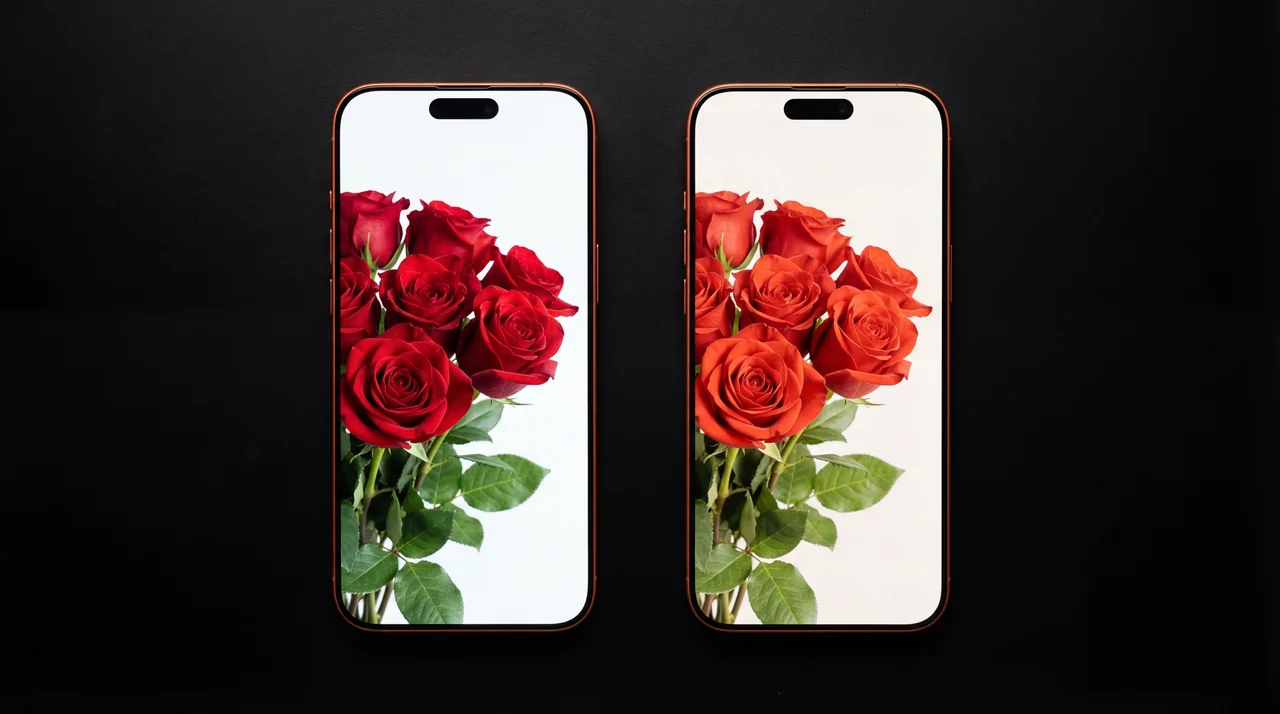
Both screens deliver vibrant colours - premium offers factory-calibrated accuracy, aftermarket soft OLED is very close.
Aftermarket Savings by Model
Save up to 71% versus Apple's own repair price with an aftermarket soft OLED screen - calculated live from our repair database. For the price of each option, see that model's repair page.
- iPhone 14 Save 71% vs Apple
or 50% vs our own genuine screen
- iPhone 13 Pro Max Save 67% vs Apple
or 47% vs our own genuine screen
- iPhone 14 Plus Save 66% vs Apple
or 37% vs our own genuine screen
- iPhone 13 Save 66% vs Apple
or 23% vs our own genuine screen
- iPhone 14 Pro Max Save 64% vs Apple
or 63% vs our own genuine screen
- iPhone 14 Pro Save 63% vs Apple
or 52% vs our own genuine screen
- iPhone 15 Plus Save 61% vs Apple
or 46% vs our own genuine screen
- iPhone 15 Save 60% vs Apple
or 50% vs our own genuine screen
- iPhone 13 Pro Save 60% vs Apple
or 42% vs our own genuine screen
- iPhone 16 Plus Save 57% vs Apple
- iPhone 16 Pro Max Save 55% vs Apple
- iPhone 15 Pro Max Save 55% vs Apple
or 51% vs our own genuine screen
- iPhone 17 Save 53% vs Apple
- iPhone 16 Pro Save 53% vs Apple
- iPhone 16 Save 52% vs Apple
- iPhone 15 Pro Save 50% vs Apple
or 47% vs our own genuine screen
- iPhone 13 mini Save 50% vs Apple
or 20% vs our own genuine screen
- iPhone 17 Pro Save 44% vs Apple
- iPhone 16e Save 43% vs Apple
or 41% vs our own genuine screen
- iPhone 17 Pro Max Save 42% vs Apple
Honest Trade-Offs of Soft OLED Aftermarket
We believe in transparency. Here are the genuine trade-offs of choosing our soft OLED aftermarket screen over the original. The newest one arrived with iOS 27 in September 2026: Tap to Wake, listed below. Our guide to iOS 27 Tap to Wake not working on replacement screens explains which models it hits and what you can do about it.
Touch sensitivity
May exhibit slightly different touch responsiveness. In rare cases, areas of the screen may be less responsive than the original.
Colour balance
Colour temperature may differ slightly from Apple's factory calibration. Most noticeable when comparing side-by-side with an original.
Battery drain
Soft OLED draws marginally more power than Apple's original -the difference is minimal. Poor quality aftermarket (hard OLED/LCD) has significantly higher battery impact.
True Tone
May not be supported. True Tone uses Apple's sensor calibration profile paired to the original display.
Tap to Wake on iOS 27
iOS 27 switches Tap to Wake off on any replacement screen that has not been configured through Apple's Repair Assistant, and an aftermarket screen cannot be configured. Raise to Wake and the side button still wake the phone. Apple has not said whether this is deliberate.
Not designed by Apple
No aftermarket display is engineered by Apple. While high-quality soft OLED panels perform very well, they are third-party components.
What You'll See in Settings
Apple tracks every display replacement through Settings > General > About > Parts and Service History. For the original display to show as "Genuine", the screen and sensor flex cable must be a matched pair from the factory - not locked to another device's iCloud. Any third-party screen, regardless of quality, will trigger a notification.
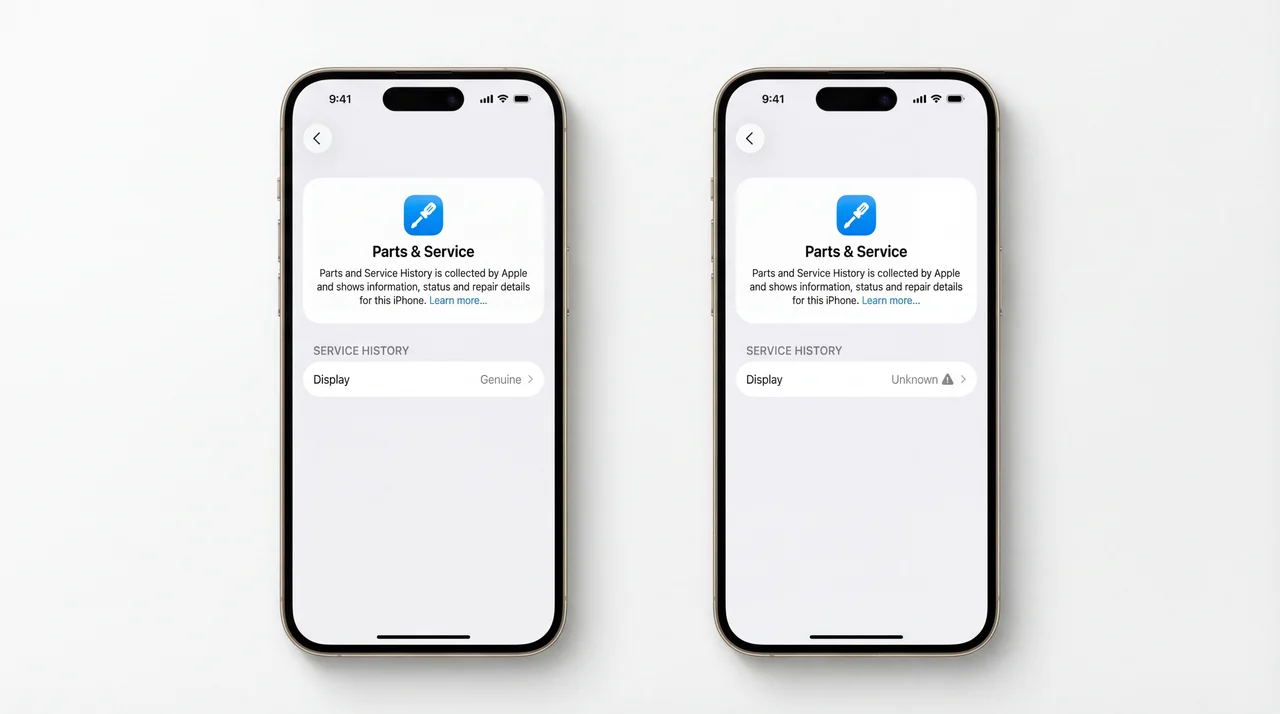
Premium repair (left) shows "Genuine" or "Used" - aftermarket repair (right) shows "Unknown" in Parts and Service History.
What this means in practice
The notification is cosmetic
It does not affect your ability to use the phone. Apple confirms: "These messages don't affect your ability to use your iPhone."
True Tone & auto-brightness may be affected
Apple has toggled these features in past iOS updates for non-genuine displays. They may or may not work depending on your iOS version.
Future iOS updates are unpredictable
Apple can introduce further limitations at its discretion, and it has. iOS 27 switched off Tap to Wake on every replacement screen that has not been configured, genuine or aftermarket, on phones where it worked fine on iOS 26.
May reduce buyback value
The "Unknown" display status is visible to buyers and trade-in services. This may lower the resale or trade-in value of your phone.
The pop-up goes away
The "Unable to Configure Display" notification appears on first unlock, briefly again after a few days, then remains only in Settings > About permanently.
Important
By choosing an aftermarket screen repair, you are agreeing that your device will display this notification. This applies to all aftermarket screen repairs, not just ours - it is an Apple restriction, not a repairer limitation.
For full details, see Apple's support article: About genuine iPhone displays
Our Recommendation
We always recommend the premium display for the best experience, and on iOS 27 it is the one that keeps Tap to Wake
Aftermarket soft OLED exists for quality repair without Apple prices
Both options include free diagnostics and a 12-month warranty
Both are professionally installed by our qualified engineers
If budget is a concern, aftermarket soft OLED is a reliable choice -we wouldn't offer it if we didn't stand behind it.
Premium vs aftermarket screens: your questions answered
Is an aftermarket iPhone screen as good as the original?
A high-quality soft OLED aftermarket screen performs very well for everyday use. Most people will not notice a significant difference. However, it is not designed by Apple and may have minor differences in colour calibration, touch sensitivity, or True Tone support. For the closest-to-factory experience, we recommend the premium option.
Will an aftermarket screen damage my iPhone?
No. A professionally installed aftermarket screen will not damage your iPhone. We use high-quality soft OLED panels and all installations are performed by qualified engineers. Both premium and aftermarket repairs include a 12-month warranty.
Does True Tone work with an aftermarket iPhone screen?
True Tone may not be supported with aftermarket screens. True Tone uses a sensor calibration profile paired to the original Apple display. Some aftermarket screens do not carry this calibration, so the automatic white balance adjustment may not function. On iOS 27 there is a second feature to know about: Tap to Wake is switched off on any replacement screen that has not been configured through Apple's Repair Assistant, and an aftermarket screen cannot be configured.
Does Tap to Wake work with an aftermarket iPhone screen?
Not on iOS 27. Since iOS 27, Tap to Wake is switched off on any replacement screen that has not been configured through Apple's Repair Assistant, and Repair Assistant only configures genuine Apple parts. The Tap to Wake switch disappears from Settings, Accessibility, Touch, while Raise to Wake and the side button carry on working. A genuine screen that has been configured keeps Tap to Wake. Apple has not commented, so it may yet change in a later update.
How much cheaper is an aftermarket iPhone screen repair?
A high-quality soft OLED aftermarket screen saves you a significant amount compared to a premium Apple screen - the exact saving varies by model. See our savings-by-model comparison above for how much you save on your iPhone, and each model's repair page for the price of both options.
What is the difference between soft OLED and hard OLED aftermarket screens?
Soft OLED uses a flexible plastic substrate, making it thin, durable, and flush-fitting - the same fundamental technology Apple uses. Hard OLED uses a rigid glass substrate, making it thicker, more brittle, and prone to protruding from the phone frame. At mendmyi, we exclusively use soft OLED aftermarket screens for the best possible quality and fit.
Can I upgrade from an aftermarket screen to a premium one later?
Yes. If you start with an aftermarket screen and later decide you want the original Apple display, we can replace it with a premium screen at any time. You would pay the premium screen price for that upgrade.
Does the warranty cover aftermarket screen repairs?
Yes. Both premium and aftermarket screen repairs at mendmyi include our full 12-month warranty covering parts and labour. If anything goes wrong with the screen within the warranty period, we will repair or replace it at no additional cost.
Which iPhone models can get aftermarket screen repair at mendmyi?
We offer aftermarket soft OLED screen repair across the iPhone 13, 14, 15, 16 and 17 ranges, and we add models over time. See our savings-by-model comparison above for every model we currently cover and how much you save on each.
Need a Screen Repair?
Walk in to our Haverhill store or get a free quote online.
Screen Repair Quote
Tell us your iPhone model and we'll get back to you within 24 hours.